Graduation projects
Strategies for management of seismic vulnerability of the cultural-historical circuit of Timisoara
Principal author
Bianca AzapCollaborators (team members)
arh. Dan Purice, asist. dr. arh. Ștefana BădescuExternal collaborators
prof. habil. ing. Marius Moșoarcă, asist. drd. arh. Iasmina ApostolProject year
2018Location
TimisoaraLearning institution
Facultatea de Arhitectură și Urbanism, TimișoaraProject description
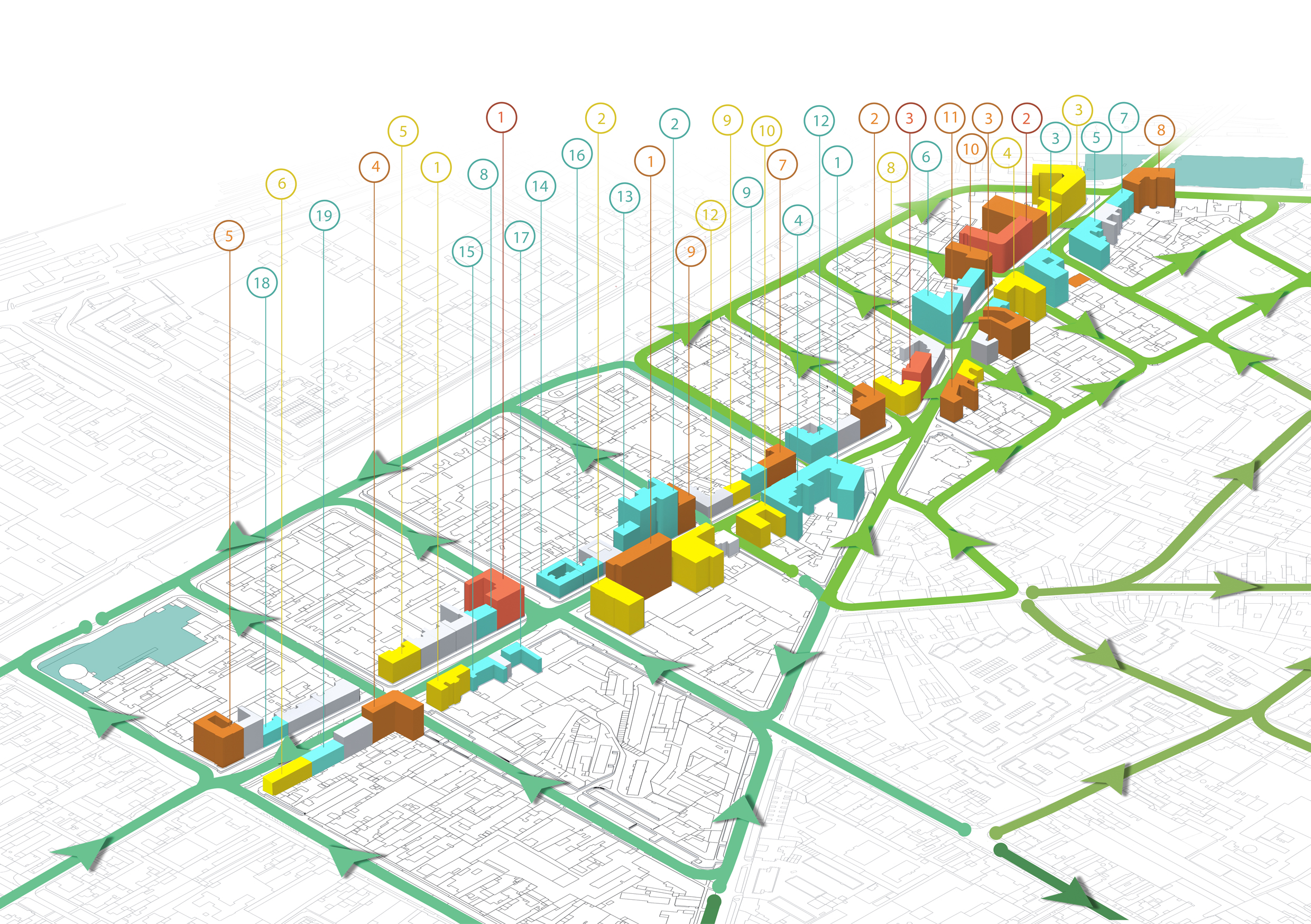
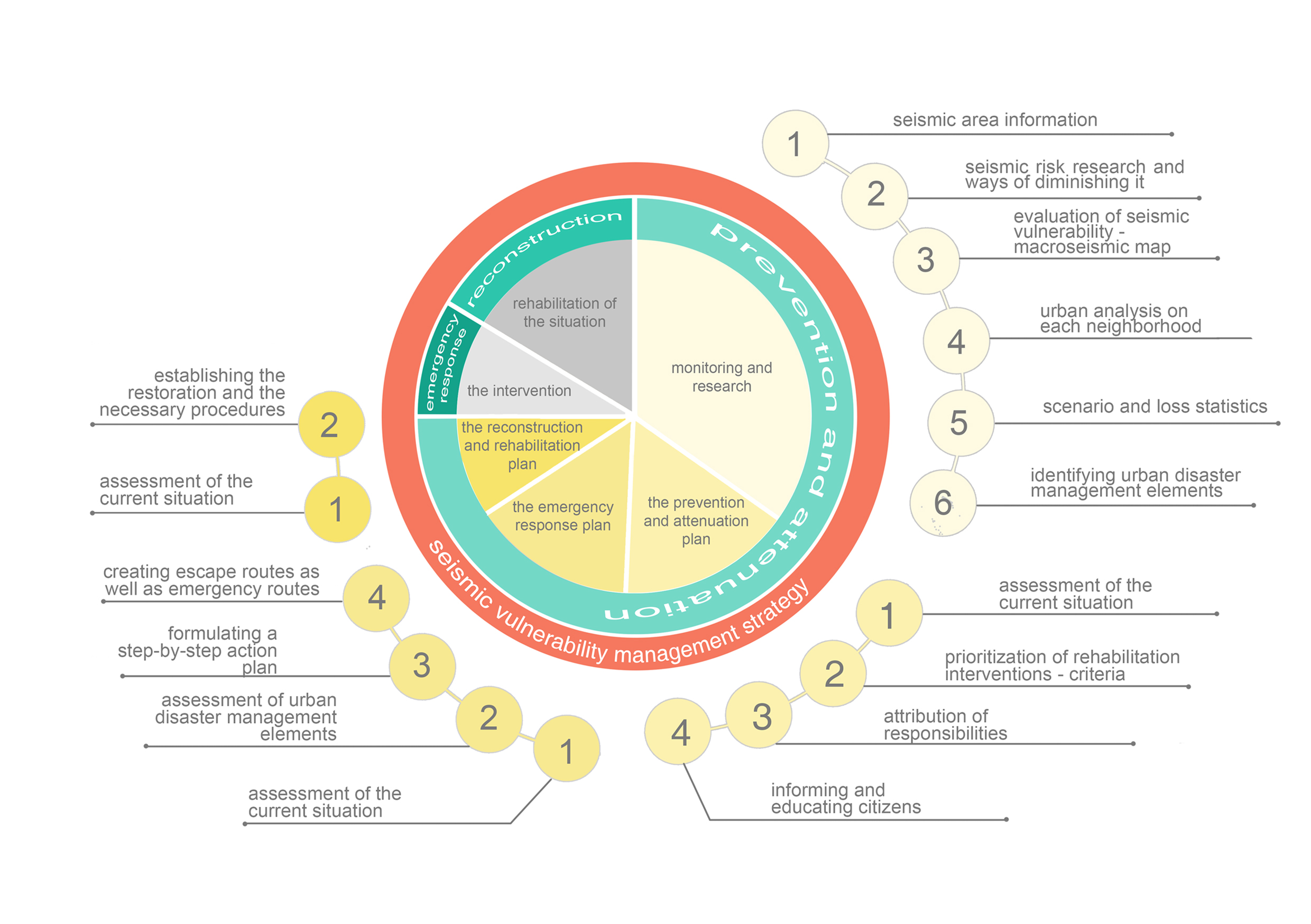
Absence of a study or document that includes an analysis of seismic vulnerability in Timişoara, a macroseismic map and a strategy of approach and intervention on this subject, whether we refer to prevention and mitigation, emergency response or reconstruction and rehabilitation, is the trigger issue and is the purpose of this work, namely to create a disaster management plan, which proposes the implementation of the necessary measures to develop an urban environment capable of resisting disaster, which must be calibrated in a way that can withstand major emergency or high-evacuation operations during a disaster. The intention of the strategy is not limited to this, and therefore urban development of a city is taken into account in order to be able to recover and restore fluently as a result of a high earthquake intensity. The seismic vulnerability management strategy is structured in 3 stages: prevention, emergency response and rehabilitation, the most important stage being the first one, as it is the basis of the latter, the unrecognizable identification of the needs and capabilities of the city generating an improper answer in case of earthquake. The stages and microstrategies of the proposed management plan are illustrated in the diagram above. After the first stage, it was observed that in the case of a seismic event, the city may suffer significant losses in several aspects such as: social, economic, cultural-historical, population, built-up, etc. Thus, the following steps focus on reducing vulnerabilities on specified domains, pointing both to pre-crisis and post-crisis strategies. Several chapters that the paper develops are: prioritization of interventions according to various criteria: damage level, architectural value, number of inhabitants, etc., attribution of responsibilities, information to citizens, evaluation of urban disaster management elements: evacuation sites, hospitals, streets , etc., creation of evacuation routes, formulation of a stepped action plan, etc. It has also been found that adequate preventive measures can considerably reduce the negative consequences of earthquakes at a much lower socio-economic cost than the cost of post-earthquake interventions (eg the illustrated timeline). This work can be the starting point for a city-wide disaster management plan, which can form the basis of an official document made by the local administration and a multidisciplinary team, that can then be adopted by emergency institutions and transmitted to the public for to get the most correct response.Text description of the author
I am a graduate of the Faculty of Architecture and Urbanism in Timişoara, 2018. I was born on 08.05.1993 in Reşiţa, where I graduated from Colegiul Național Traian Lalescu. Throughout the faculty I had some art exhibitions (photography, painting, portraits) and, although I am passionate about architecture and the artistic side in general, I am attracted to the scientific part as well, which is why I chose to focus on research in the bachelor thesis.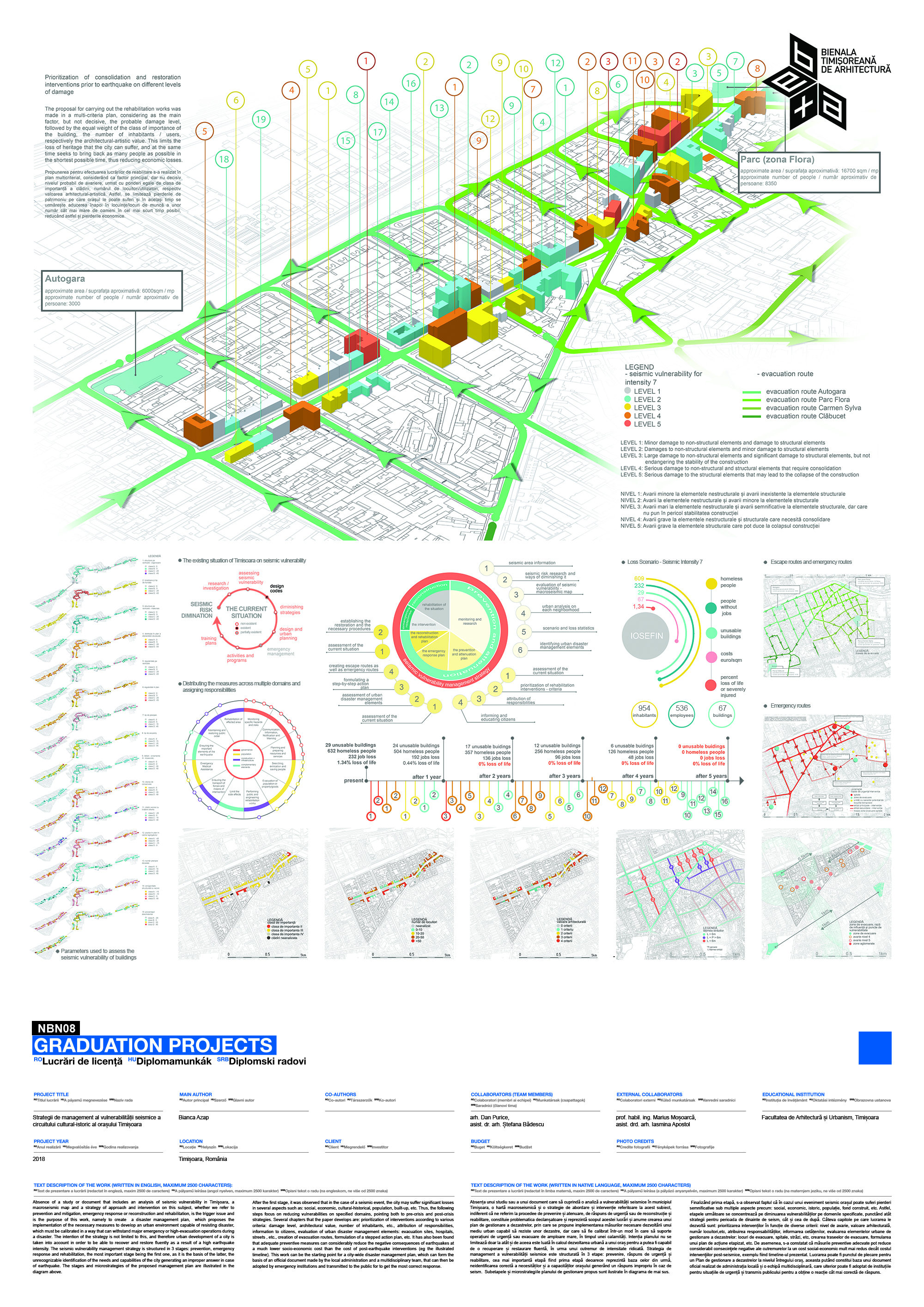
Download
Project