Graduation projects
Emergency neighbourhoods, Urban refugees
Principal author
Radu VitProject year
2017Location
Karlsruhe,Baden-Wurttemberg, GermanyLearning institution
Faculty of Architecture and Urbanism in Timisoara, RomaniaProject description
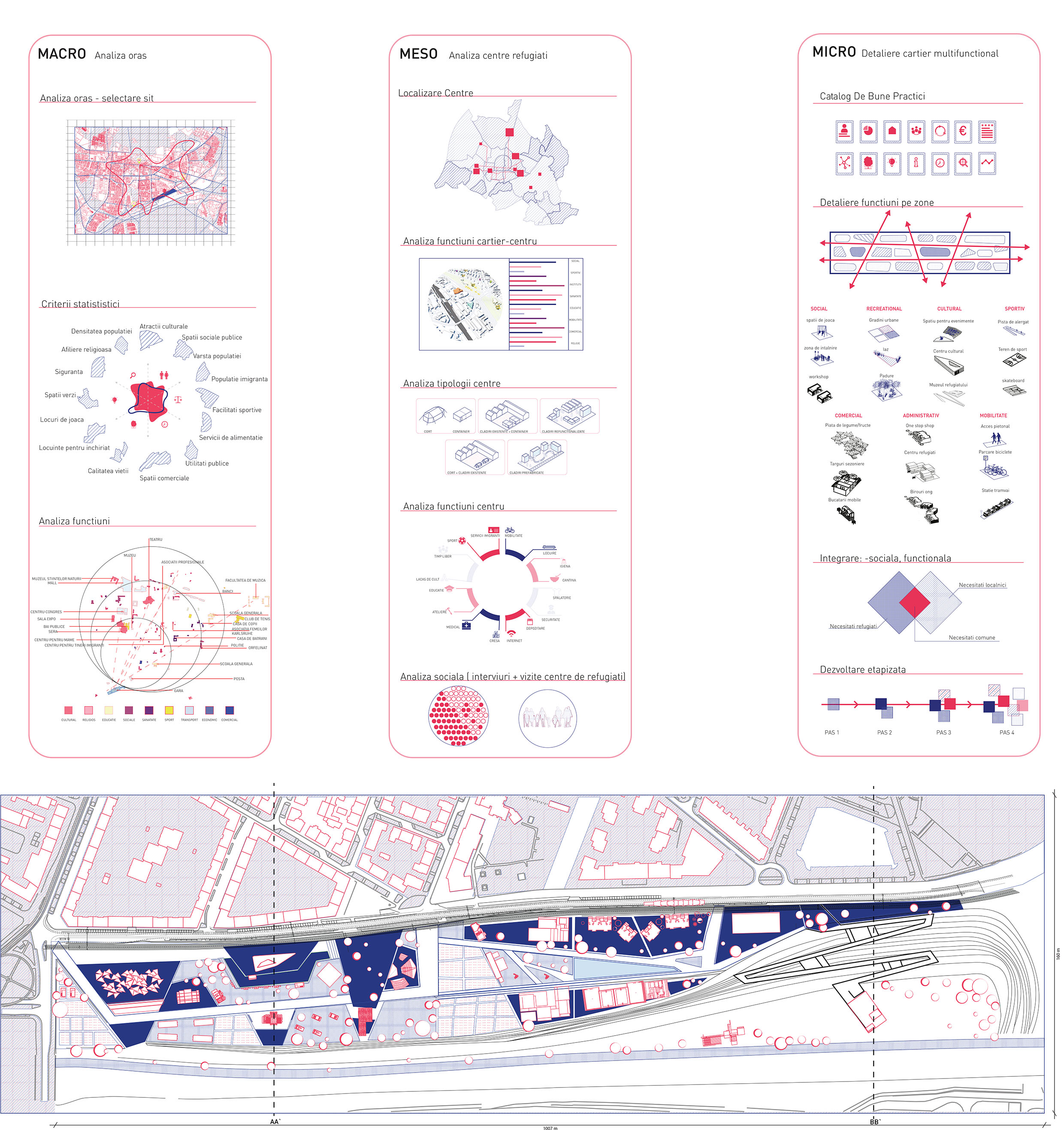
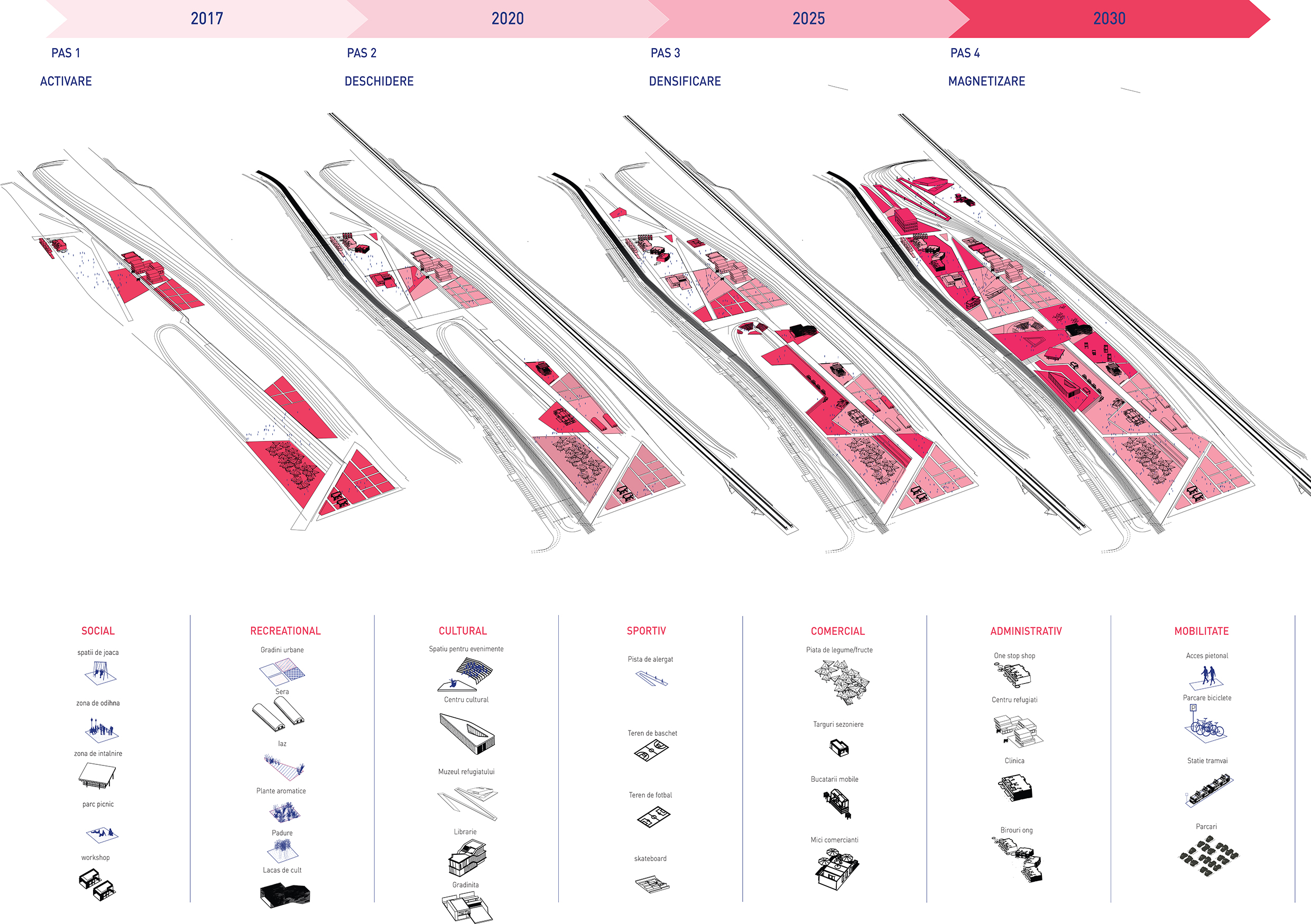
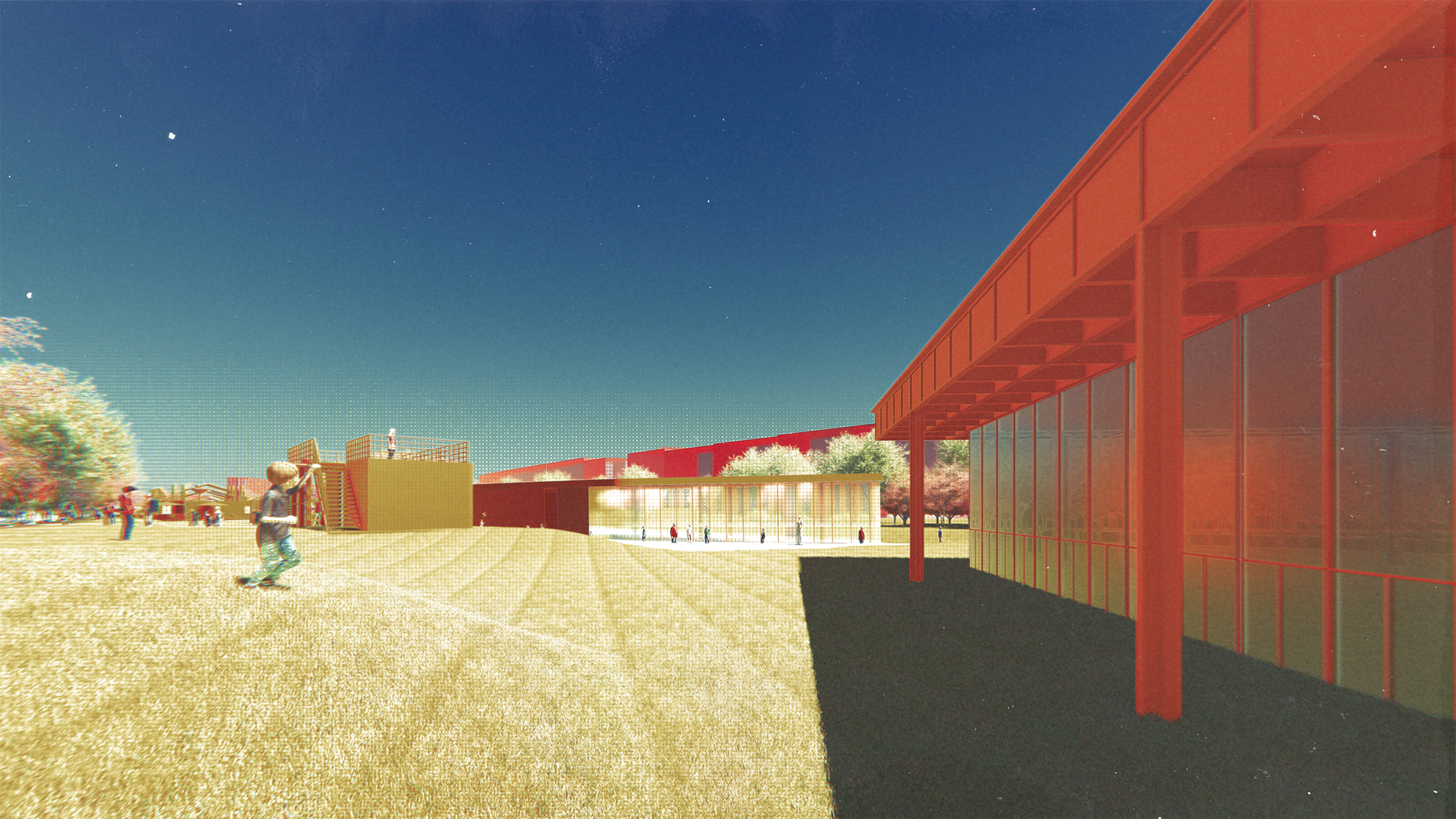
As the world’s refugee population continues to grow the ever increasing need for solutions to integrate them in their new adoptive communities continues to be pressing. The following proposal focuses on the issues urban refugees face in Europe and how we can best address them not only from a housing standpoint but also from a social one. The city of Karlsruhe, Germany has been selected as the main study case specifically because of its role as one of the main arrival points for refugees in Germany during the height of the 2015 crisis. For the purpose of the analysis several study trips have been made to refugee centers in Karlsruhe, NGO’s headquarters, local universities, events and workshops dedicated to refugees. During this period I have managed to take interviews with refugees and volunteers inside some of the centers around Karlsruhe. The proposed solution consists of a plan that future communities can use to analyses and develop responses best suited for the context. This strategy has been used as a study case for Karlsruhe, Stuttgarter Str. The first part of the proposal is divided into three categories (Macro, Meso, Micro): Macro focuses on data from surveys and urbanistical analysis of the city to generate a preliminary image of the general context and determine the best sites and practices for the city. Meso looks at the already existing refugee centers in Karlsruhe determining their typologies, connections with local institutions, functions and influence on both the local population and new arrivals. The conclusions c an be used as a baseline for future developments in other urban environments or as a guideline to analyses local refugee centers and determine the optimal intervention for the given context. Micro puts accent on understanding the surroundings of the of the intervention, developing detailed data about functions, issues and needs of the inhabitants and how to best address them. For all of this a best practices plan has been developed and implemented in the case of Stuttgarter Str with a step by step development strategy. The end result consist of a Toolkit (adaptable for other sites) that can be used to generate punctual interventions. All of these steps have been utilized for the study case on Stuttgarter Str generating a reversible architectural solution that addresses the needs of both the neighboring population and also refugees. All of these functions can develop later on into permanent ones depending on demand.Text description of the author
My name is Radu Vit and I have graduated the Faculty of Architecture and Urbanism in Timisoara, Romania. During my years of study, I have always sought to widen my views by volunteering within various projects. One of such projects was for the Solar Decathlon Versailles 2014 where, with the help of a multidisciplinary team, we managed to qualify for the final stages of the competition. My final diploma project is focused on the refugee camps and the issues they poise within the city of Karlsruhe, Germany. From forced displacement from their homes to an unwilling segregation within their new adoptive country they are confronted with an ever increasing opposition towards their arrival without being offered any real solutions. The proposal revolves around an urban proposal in which refugees are being offered new opportunities for them to integrate in the local fiber of their new societies. Currently I am working for KSP Jürgen Engel Architekten in Frankfurt am Main after completing a 6 month internship.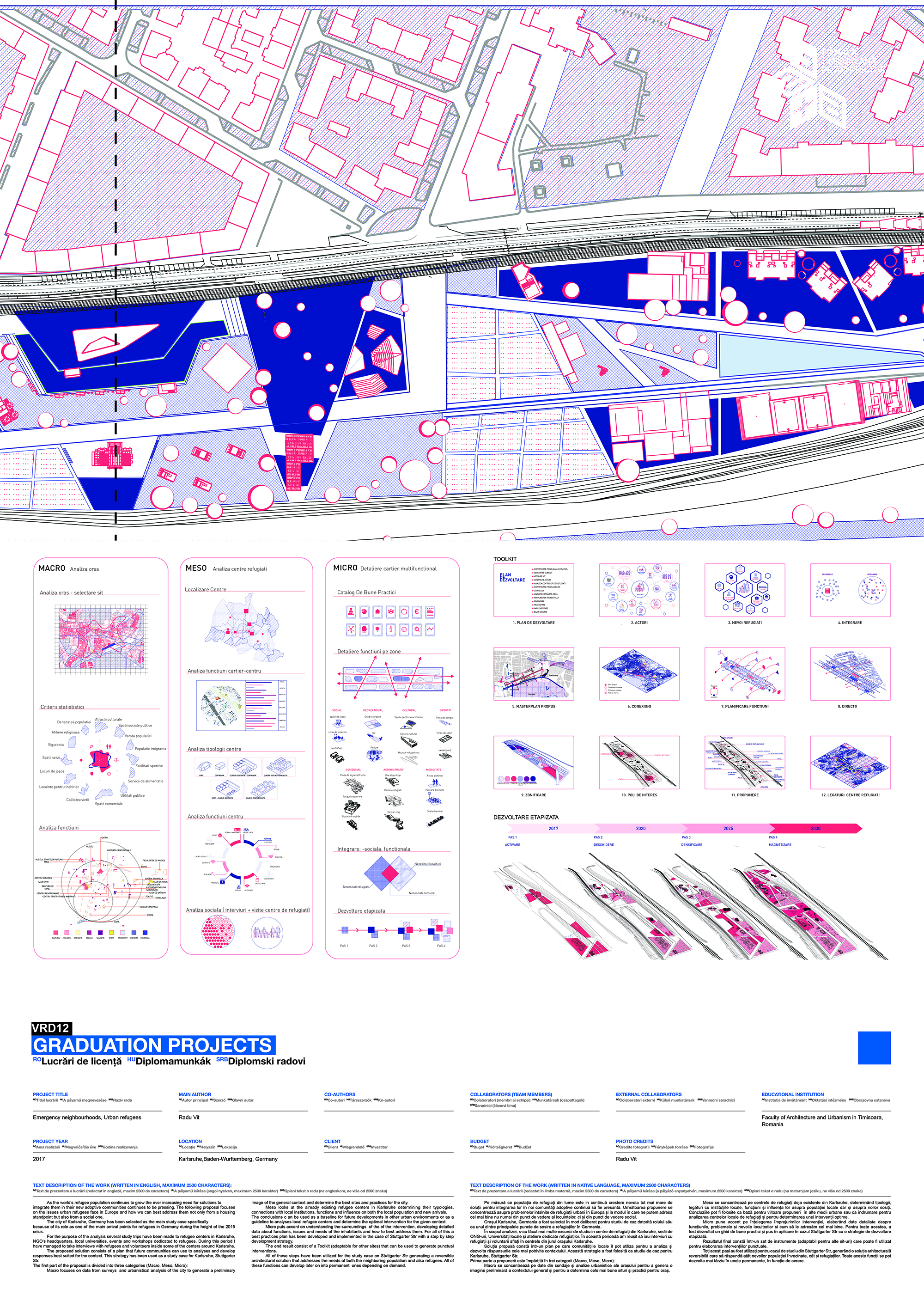
Download
Project