Graduation projects
Urban collage- Riverfront brownfield regeneration in Budapest
Principal author
Orsolya GodraExternal collaborators
Marius Stelian GămanProject year
2018Location
Budapesta, UngariaLearning institution
Facultatea de Arhitectură și Urbanism TimișoaraProject description
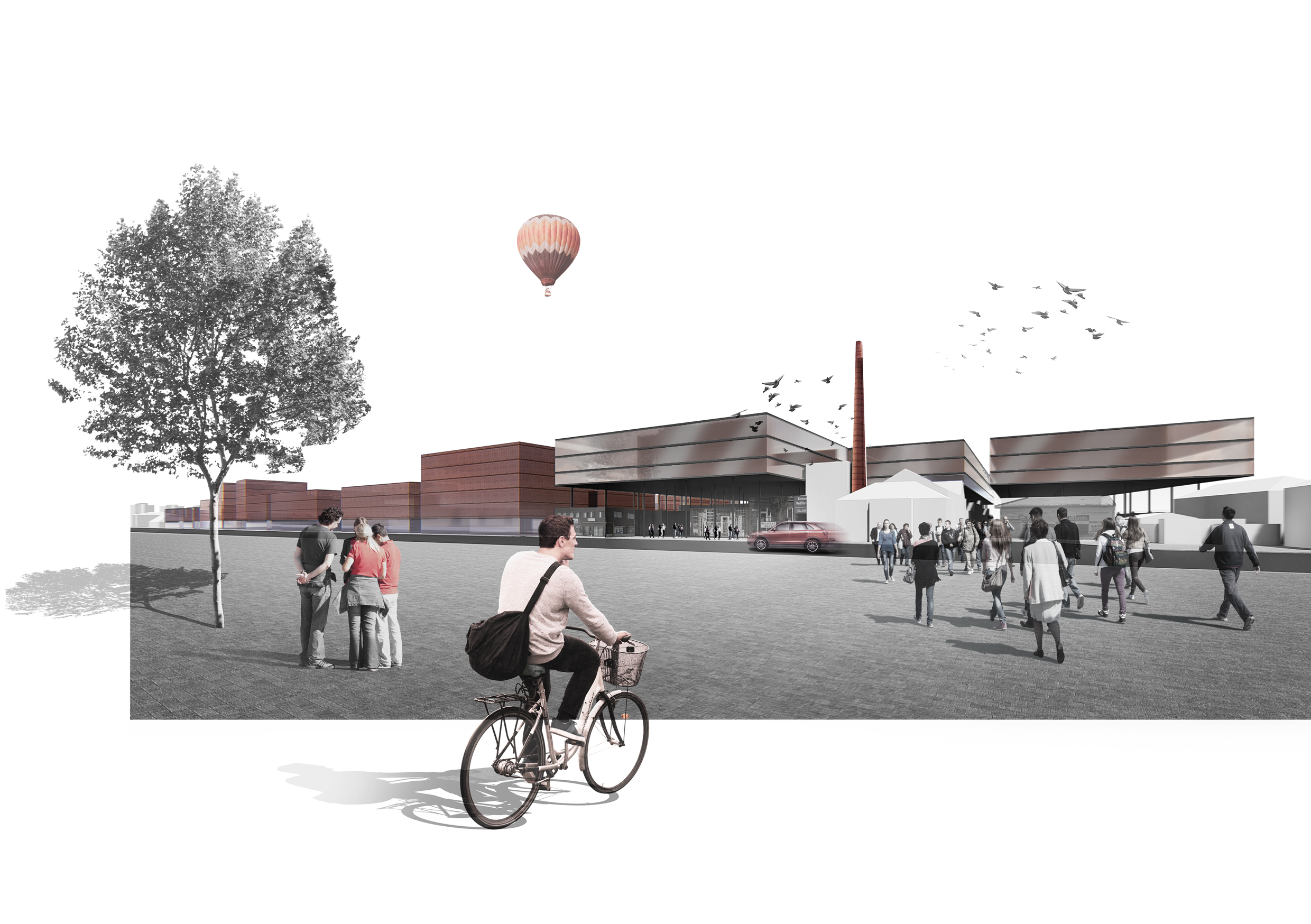
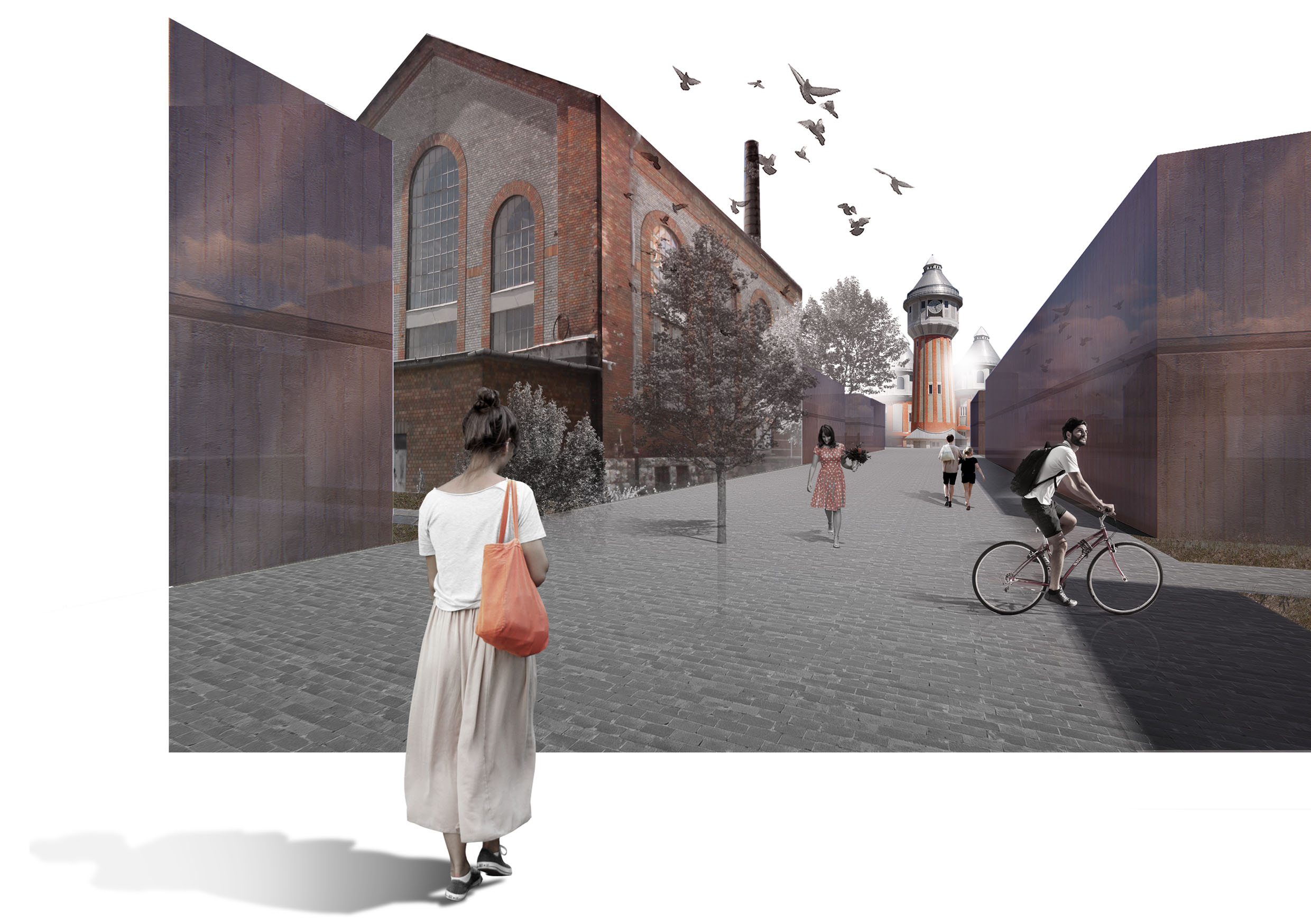
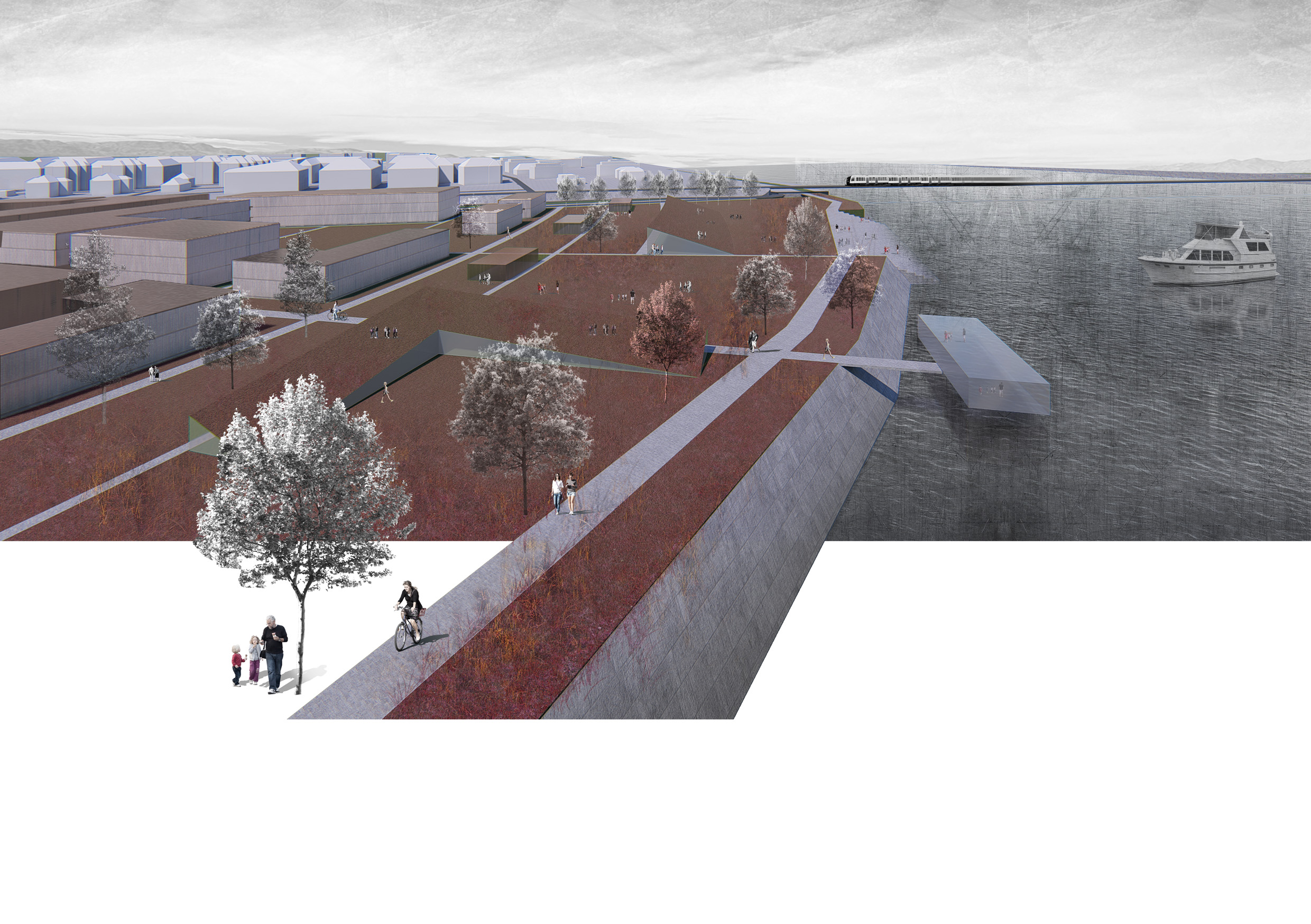
The project approaches the problem of waterfront brownfield regeneration by presenting a solution for the site located in the north-western part of Budapest, in the Óbuda district. The revitalization of the site is one of the main objectives specified by the city’s Long-Term Urban Development Concept. The major problem is the urban fragmentation of the site: socially and spatially. The area is formed by several smaller zones, every one of these having a specific character. These zones are creating an urban collage, spatially and temporally, but for now it remains dysfunctional. The solution concentrates on remodeling these zones by preserving their local character, and in this context the reconfiguration of the transit spaces becomes an important matter. The strategy operates on two levels: on the layer of passages (linear elements) and the layer of zones (surface elements). On the first layer the main goal is to transform the negative barriers in attractive passages and to create new connections with the Danube. The main subject of this layer is reconnection. The layer of surface elements refers to the two intervention zones, spatial densification and social intensification are the crucial topics. Reconnection is achieved by interpreting the two major barriers on the longitudinal direction of the site. Along the river a new green promenade reactivates the site with bikeways and public spaces. The main street on the central ax, which had been the former factory’s railway line, is transformed in a boulevard with touristic spots and new public transport lines to grow the urban mobility. On the layer of zones different densification methods are applied: by the reconfiguration of public spaces the lost identity of abandoned spaces will be redefined. Not only the urban hardware (the physical environment), but also the software (activities) must be revitalized: a wide range of new functions generates an active urban space, used by residents and tourists. The new cultural-educative-economic district with numerous residential and commercial spaces respects not only the urban regulations, but also the existing functional modules on the site, and contributes on the development of a knowledge-based economy. The conclusions are valid for the cities of Eastern Europe: the ignorance for brownfield sites can be diminished by implementing urban catalyst elements, but also by respecting the memory of space and redefining the cultural identity of the abandoned urban areaText description of the author
I am an architecture graduate at the Faculty of Architecture and Urbanism Timișoara, promotion of 2018. As (architecture) students generally, I always liked to travel, to analyze the environment that surrounds me, and to develop myself professionally and personally by these journeys. On such a journey, which became more than just a holiday trip after all, I chose the theme of my thesis project. In 2016-2017 I was studying at the Budapest University of Technology and Economics, and I immediately felt in love with this city. I loved to discover every single corner of it, however, my favorite route was the Danube’s riverbank. Because I like the subjects and situations that challenge me, but I do not like conventional solutions, I decided to approach one of the main urban issues of the city –its relation with the Danube-, trying to find an innovative answer to the problem.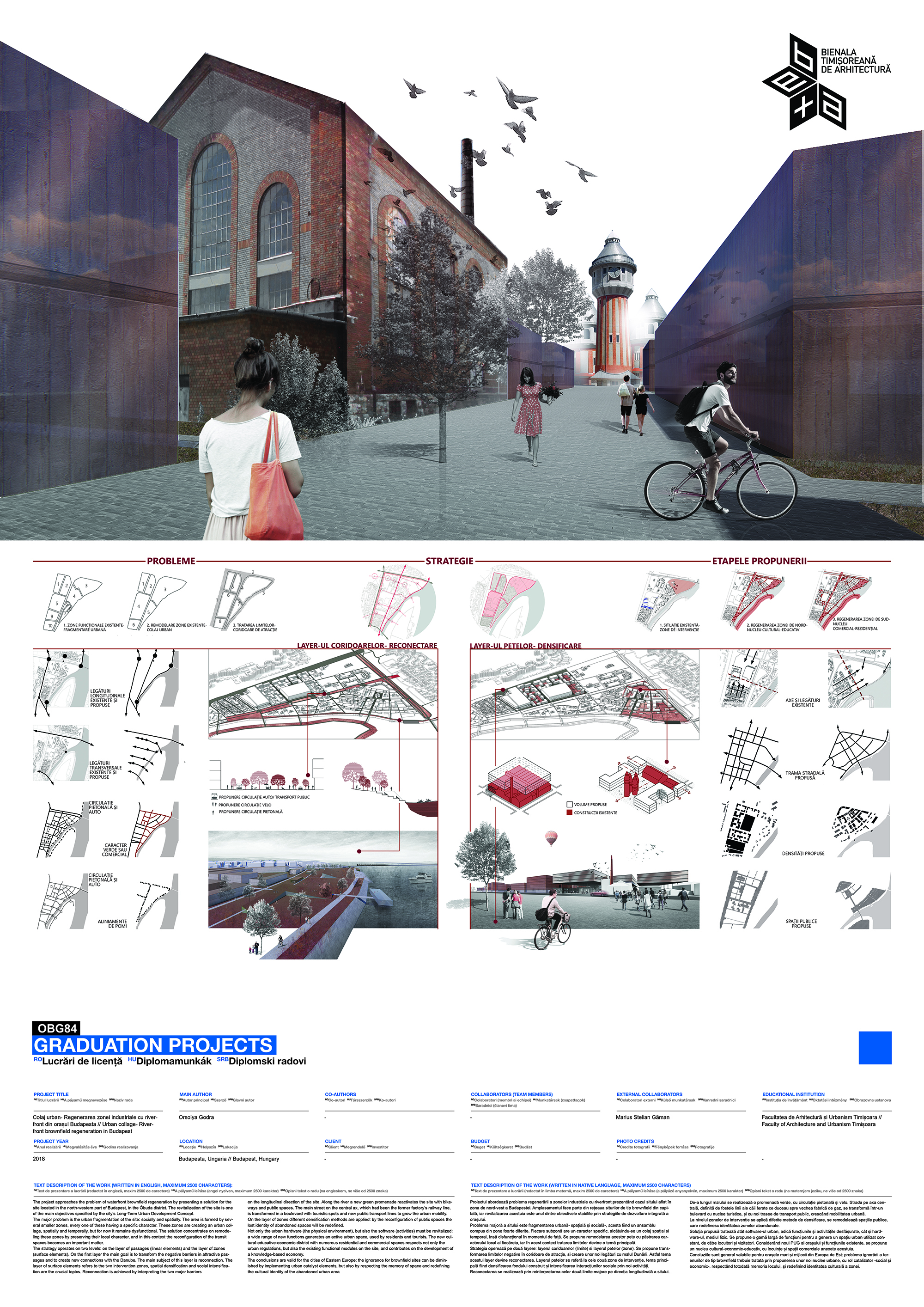
Download
Project