Graduation projects
ROMAN - CATHOLIC MONASTIC CENTER
Principal author
COBE ALEXANDRU-LUCIANProject year
2017Location
BORSEC - JUD. HARGHITALearning institution
FACULTATEA DE CONSTRUCTII, CADASTRU SI ARHITECTURA, ORADEAProject description
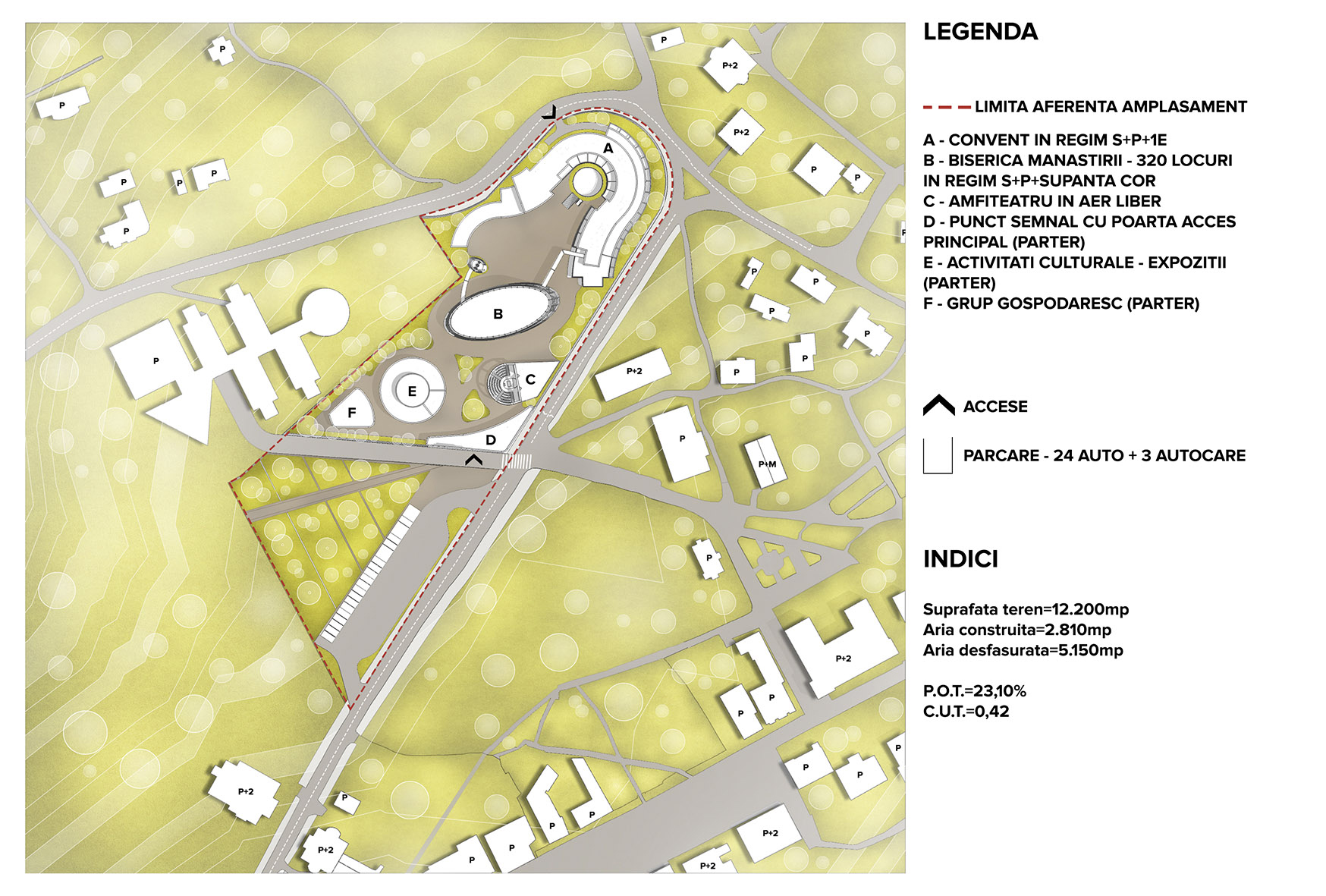
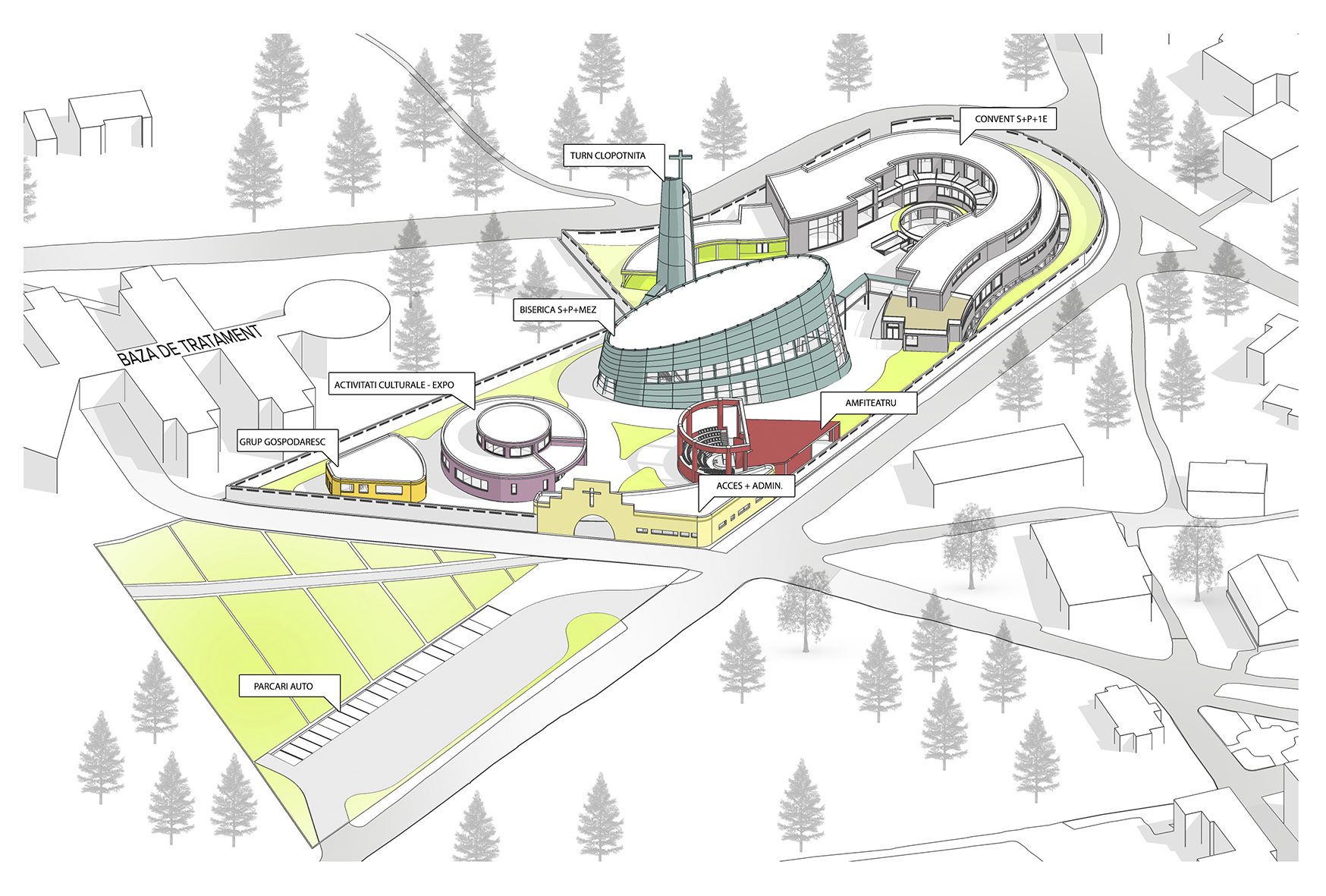
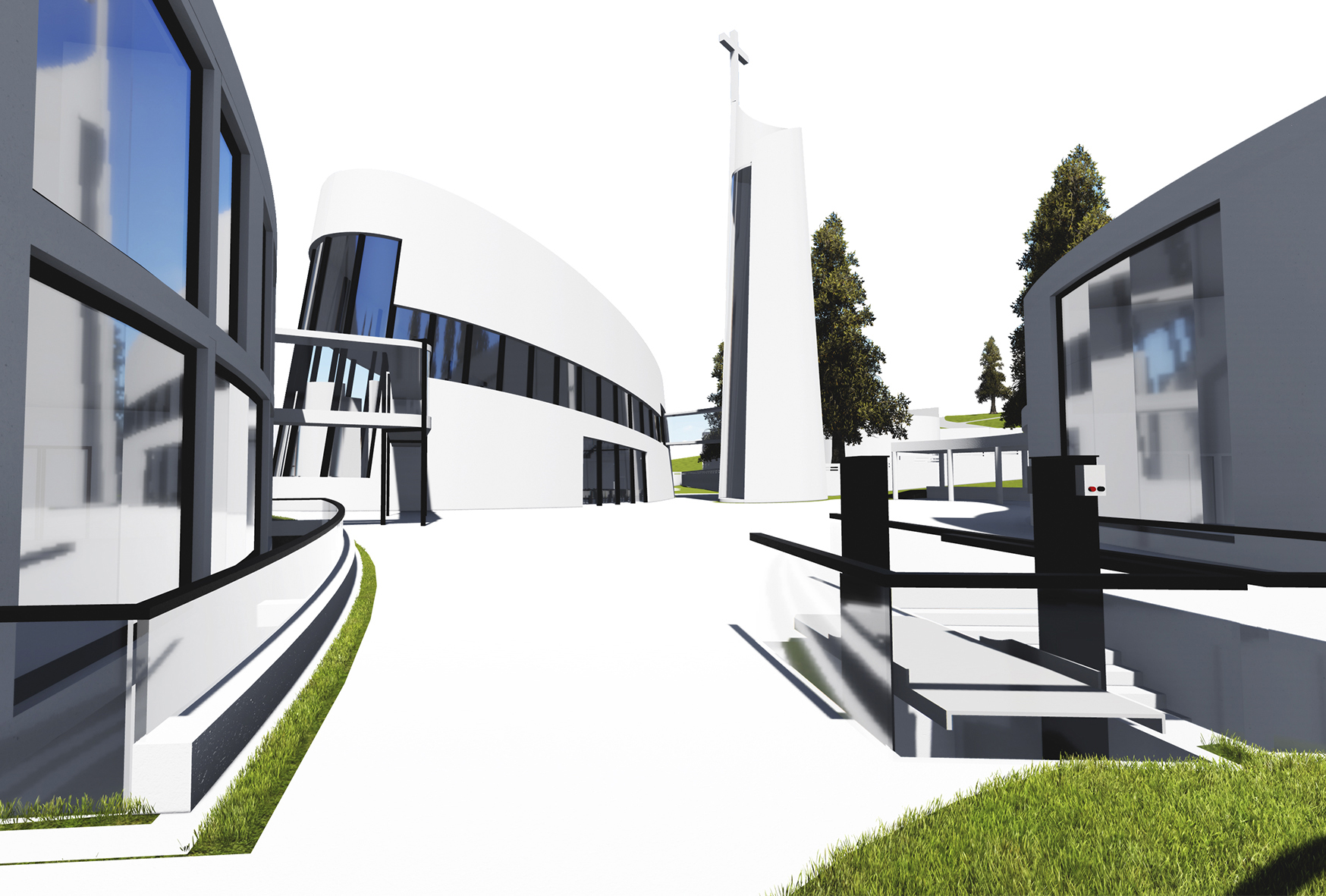
The site proposed for study is in the central area of Borsec - at the intersection of the Jokai Mor and Carpathian streets, with direct accessibility, yet located on a national, regional road, the heritage values built and natural both inside the city and Its surroundings, but also the cultural traditions with a major identity (the mineral water tradition, the spa treatment) are decisive advantages of the city in the competition between the localities-resorts for attracting tourists and hosting the events. The existence of a spa and sports infrastructure in the reconstruction-extension, but also the proximity of famous national and international tourist destinations (Călimani National Park, Lacu Roşu - Hăşmaşul Mare National Park, Ceahlău Mountains - Lake Bicaz, Vatra Dornei, Şumuleu Ciuc, Harghita Băile ), But also of recognized rural areas for their picturesque (Praid, Ditrau, Izvorul Mureş, Mureş, etc.) enhances the attractiveness of events (festivals, sports competitions) organized in the city. In this way, classical tourism (balneary, cultural, urban, rural, mountain) and specialized tourism with sports, events, studies) support and stimulate each other. The location is located near the historical center of Borsec. Its shape takes over the morphology of adjacent streets. Pedestrian routes form a link to the historic center and pedestrian paths, resulting in a clear delineation of the site in the public space and in the private space. The monastic multifunctional center proposed to be located in a pavilion system on a relief with a slight gradient (approximately 7%) on a land of 7,670 sqm (the monastery center) will include the following areas: The area of worship - The monastery and church of the monastery. The monastery will be in a convent system for 10 brothers (monks), with annexes, and the monastery church will have a capacity of approx. 300 people. Cultural and confessional area: Amphitheater conference room with horizontal retractable retractable walls and retractable roof system, summer school, library with reading room, creative workshops (ornamental prints, restoration of religious art works And book binding, painting workshop, sculpture workshop and exhibition pavilion, selling worship objects). Administrative and reception area: the main access gate, the administrative sector, respectively the reception area. Household area Area of green spaces and relaxation - 20% of the total area.Text description of the author
The Roman Catholic cult is one of 18 cults recognized by the Romanian authorities. According to the census data of 2011, 870,774 Romanian citizens declared themselves Roman Catholics, compared to 1,028,401 in 2002. According to the census data of 2011, the counties with the most Roman Catholic presence are: Harghita 200,663), Bacău (94,490), Covasna (73,739), Satu-Mare (59,590), Timiş (54,547), Mureş (48,530), Bihor (48,350), Neamţ (45,338) According to the official newsletter of the Holy See, during the same period, the internal census of the Catholic Church counted in Romania 1,193. 806 Roman Catholic believers, with 165,405 persons more than those registered at the official census. Roman Catholic believers have a share of 4.5% - 5.5% of Romania's population.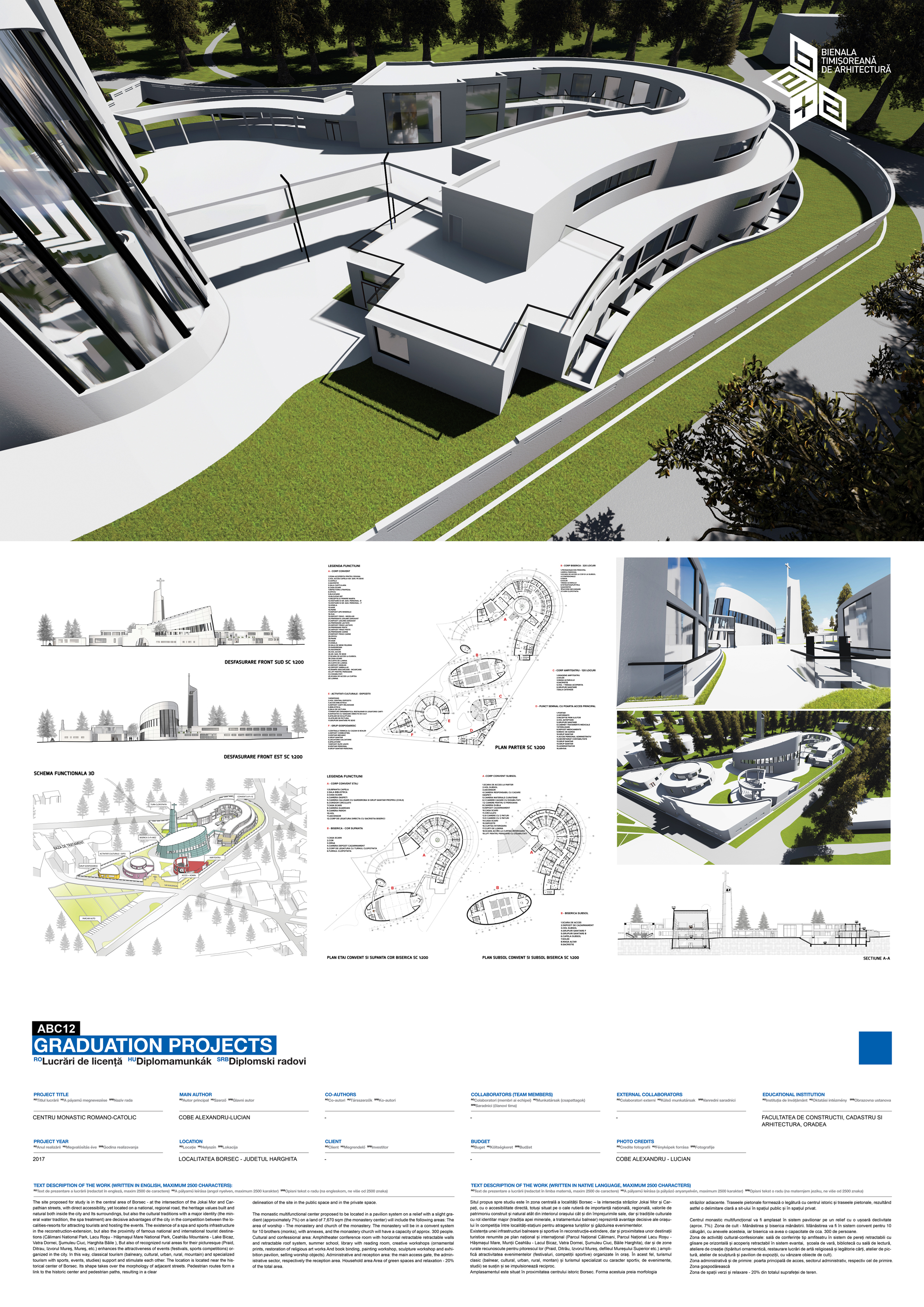
Download
Project