Initiatives / Experiments / Visions
FlexiSPOT
Principal author
Marko VučićProfession
ArchitectCo-authors (team members)
Marko Jovanović, Vesna Stojaković, Dejan Mitov, Bojan Tepavčević, Ivana BajšanskiArchitecture office
Digital Design CenterCollaborators (team members)
Milena Jevtić, Filip Nikolić, Stefan Stojičić, Stefan Tomić, Maja PapićProject year
2017Location
Novi Sad, SerbiaClient
International Science Festival 2017Budget
200eBuild surface area
10m2Project description
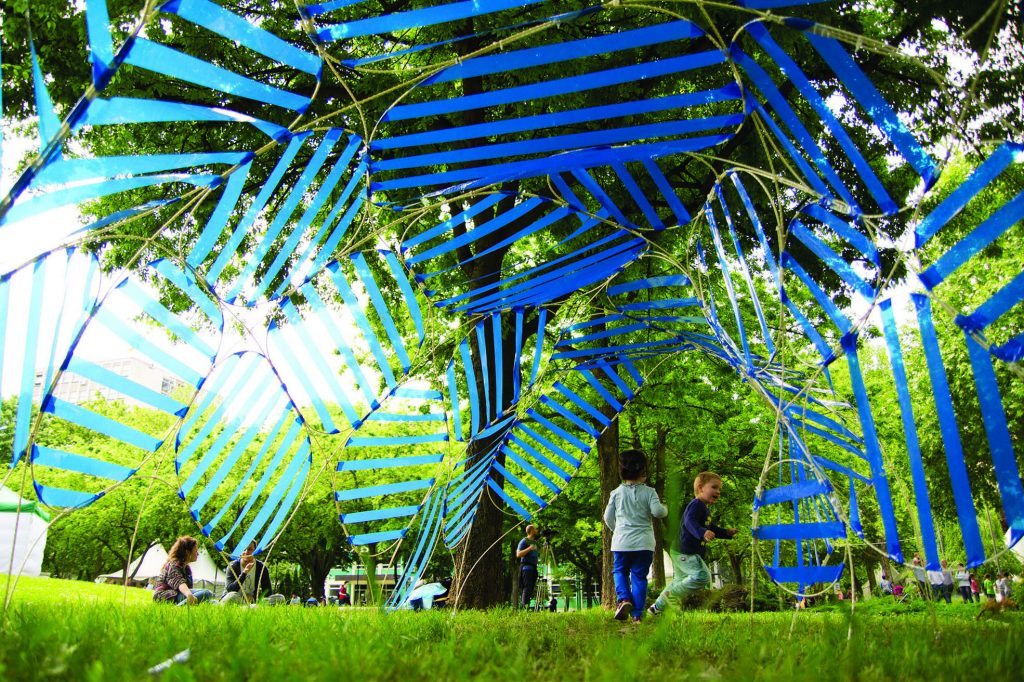
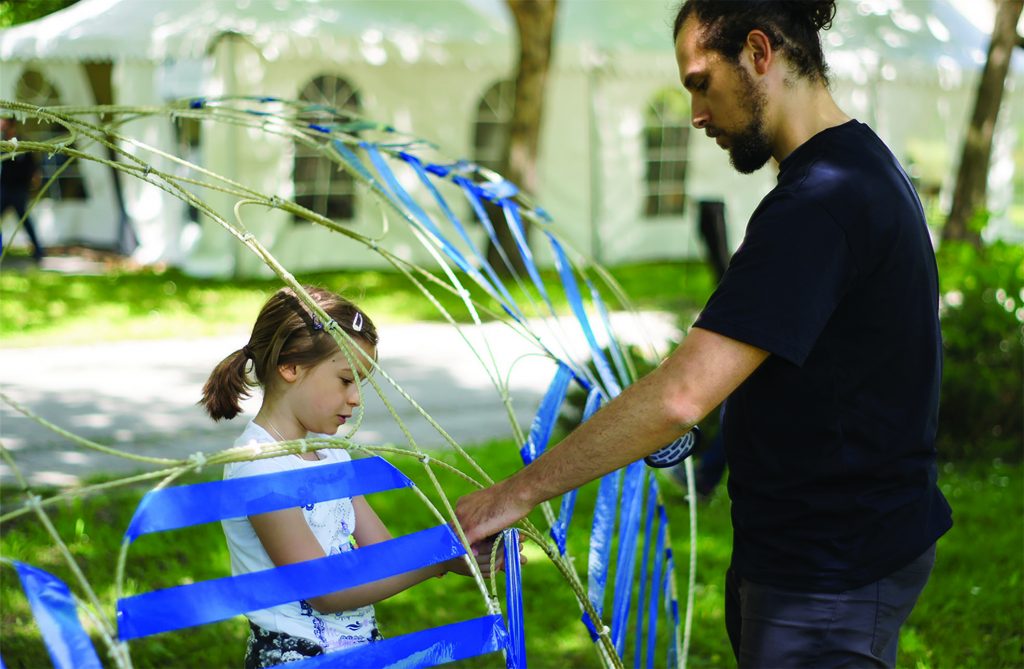
Various empiric construction methods known from vernacular architecture make use of the available building materials elastic behavior. However, only few such examples are to be found in 20th century architecture. Such structures are called structures of active forms (or structure of active bending) and represent a set of two or more elastic elements which, when connected, appropriately create a structure of high stiffness. The elasticity of the structure contributes most to the cost-effectiveness of construction, in terms of achieving a large range of construction in relation to the cost of construction. The intense development of technology, especially in the domain of simulation and calculation of structural stability, has allowed these structures to become more and more interesting for architects because of their good characteristics. In this research project, we tried to play, through the pavilion shape, with the elastic characteristics of the material and show how complex constructions can be obtained merely by using simple liner elements. The shape of the pavilion resembled a tunnel, and the linear elements formed a gridshell with fields of the oval shape. The pavilion also had a social interactive role, where, as part of the Science Festival to which it was exposed, visitors (mostly children's age) could participate in the last stages of pavilion design by adding tapes in oval shaped fields and thus closing the tunnel . In this way, the participants and visitors were able to become familiar with the good characteristics of the form active structures, i. e, to see how large ranges can be spanned by thin and elastic materials.Text description of the author
Digital Design Center is founded in 2014 at Faculty of Technical Sciences, University of Novi Sad, Serbia. Digital Design Center is dedicated to develop and investigate application of recently developed technologies in architecture, urbanism, and design. With the rapid expansion of digital technologies and simultaneous adjustment of industrial tools and techniques, architecture become perceivable in the new way that was not possible before. Many opportunities that consider analysis, study, design and product architectural structures exists today, and new ones constantly appear. Our goal is to obtain, define, and solve current architectural problems, concentrating to the fields of architectural geometry, robots in architecture, digital fabrication and production, applications for 3d modeling, surveying and visualization, programming, and other approaches.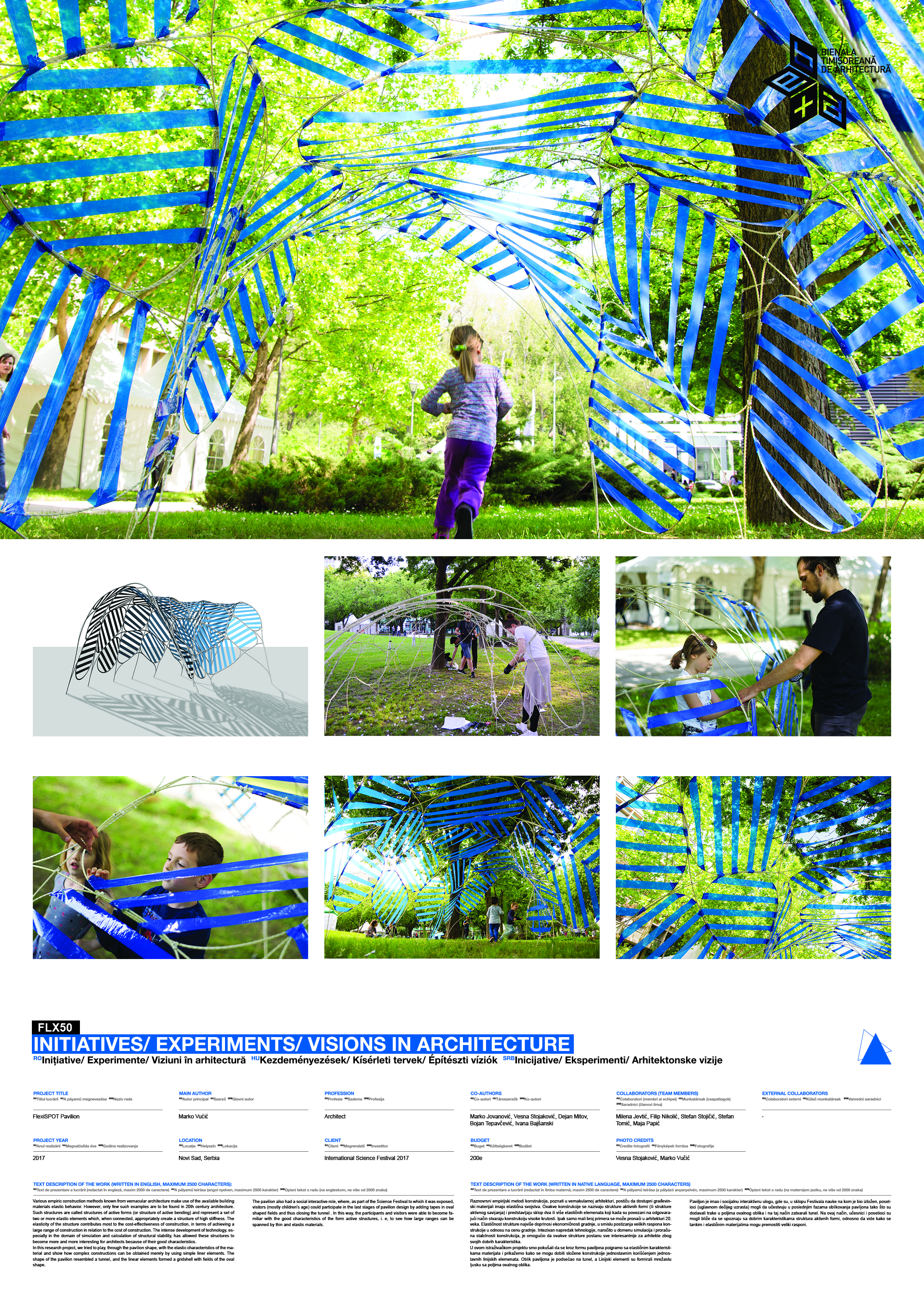
Download
Project